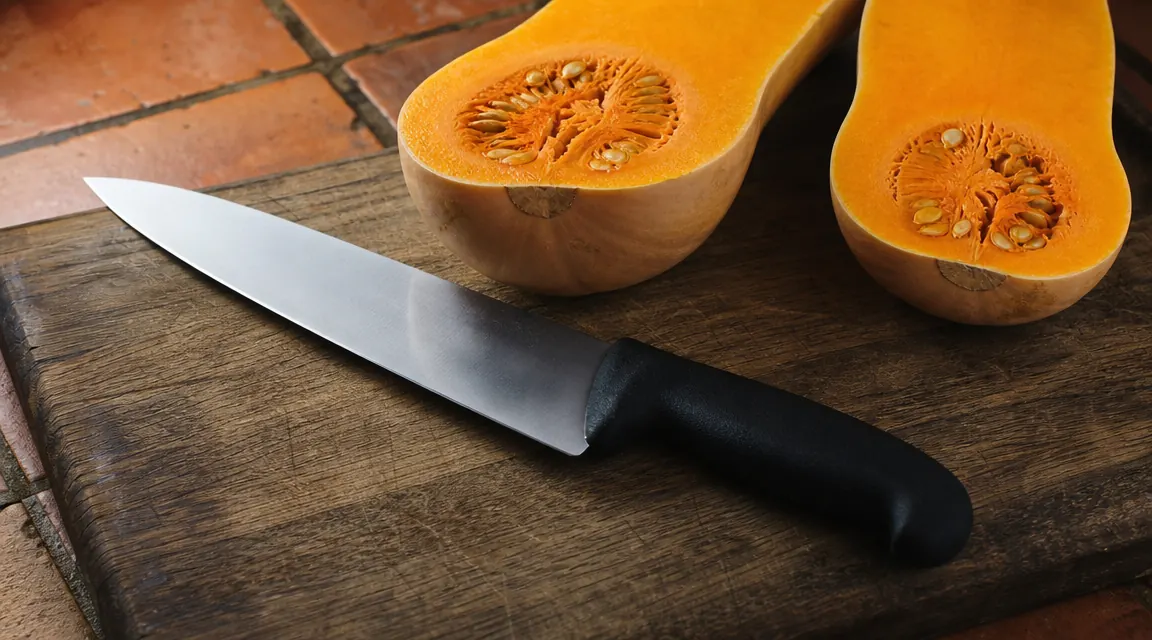
My neighbor Sheila has a premium Wusthof Classic that she babies like a firstborn child. She has a special wooden block for it, a honing rod she bought separately, and a whole speech she gives when anyone touches it. I have the Victorinox Fibrox Pro 8-inch chef knife, and I have been using it almost every single night for eighteen months. I chop onions with it. I break down raw chicken thighs with it. I have used it to pry apart a frozen block of ground beef when I forgot to thaw it. I am not proud of that last one, but the knife survived.
This review is not about specs. It is about what happens to this knife when a real person with two kids, a full-time accounting job, and zero formal kitchen training uses it as her primary blade for a year and a half. There are things nobody tells you before you buy it, and I am going to tell you all of them.
The Quick Verdict
A legitimately sharp, well-balanced knife that will outlast most people's patience for kitchen gadgets, with one honest caveat: the handle looks cheap and the edge does need more frequent attention than a premium blade would.
Amazon Check Today's Price →If your current knife is making you work harder than you should, this one fixes that.
The Victorinox Fibrox Pro 8-inch is what culinary schools hand students on day one. It is sharp out of the box, well-balanced, and priced so that if you ruin it learning how to sharpen, you have not ruined anything catastrophic.
Amazon Check Today's Price on Amazon →How I Have Actually Used This Knife
I am not a food blogger. I do not make elaborate meals for content. A typical week for this knife looks like this: Monday is sheet-pan chicken thighs, which means breaking down three pounds of bone-in thighs and chopping two bell peppers and a head of broccoli. Tuesday is usually a pasta night, but I still mince half an onion and two garlic cloves. Wednesday is soup or stew season from October through March, which means a full mirepoix plus whatever protein is on sale. Thursdays I often do a stir-fry, which is where the knife gets its real workout, thinly slicing beef against the grain and julienning carrots. Friday is pizza night and the knife stays in the block.
On weekends I sometimes do batch prep for the week ahead. Cutting up a full head of cabbage, peeling and cubing butternut squash, or breaking down a whole rotisserie chicken for salads. That is about 45 to 60 minutes of active knife work per week, compounded over 18 months. This knife has been through a lot.
I also want to be honest about my skill level when I started. I held knives wrong for most of my adult life. I used a finger-grip on the handle, not the pinch grip that chefs use. Learning the pinch grip, where your thumb and index finger actually pinch the blade just above the bolster, changed how this knife felt completely. It suddenly became more stable, more controlled, and less tiring. If you are buying this knife and you do not yet know the pinch grip, look it up before you form an opinion about the knife. It matters more than most reviews mention.

The Handle: Let's Address the Elephant in the Kitchen
The Fibrox handle is the thing that will make you hesitate in the Amazon listing. It looks like a kitchen knife you would find at a church potluck. It is matte black plastic, slightly textured, and has no visual elegance whatsoever. Next to a Wusthof with its riveted POM handle, or a Japanese knife with a walnut octagonal handle, the Fibrox looks like it came from a restaurant supply warehouse. Because, effectively, it did.
Here is what I learned after holding it for a month: the ugliness is functional. The Fibrox material is NSF-certified, which means it meets commercial kitchen hygiene standards. It does not absorb bacteria, does not swell from water exposure, and does not crack when you leave it wet on the counter by accident. The texture grips even when your hands are damp or coated in chicken fat. I have never once had this handle slip. My husband has smaller hands than I do and he can use it comfortably. My thirteen-year-old is learning to cook with it and the grip gives her confidence.
So yes, it looks cheap. No, it does not feel cheap once you pick it up. The balance point sits right at the bolster, which is exactly where it should be. The handle is not just cosmetically ugly, it is purposefully designed for real kitchen work rather than for sitting in a knife block looking impressive.
I spent three weeks convincing myself the handle looked bad. Then I used it every night for a month and stopped caring entirely. Function won.

Sharpness Out of the Box and What Happens After Six Months
Out of the box, this knife is sharper than any knife I had previously owned. My old knife, a budget stainless block set from a big box store, required actual effort to get through a tomato. The Fibrox Pro slid through a Roma tomato with almost no pressure. That first week felt like I had discovered a kitchen superpower.
Here is the honest part. Around the four-month mark I noticed it required a little more pressure on tomato skin. At six months, it was still usable but no longer effortless. I had not been honing it regularly, which was my mistake, not the knife's. When I started using a honing rod before every third or fourth use, the edge stayed noticeably sharper for longer. Honing is not the same as sharpening. Honing realigns the microscopic edge that folds over with use. Sharpening actually removes metal and resets the angle. This knife needs to be honed consistently and sharpened probably once or twice a year with regular home use.
Compared to my neighbor Sheila's Wusthof, the Fibrox edge does not hold quite as long between sharpenings. Sheila's knife holds a working edge for longer because it is made from a slightly harder steel. The Victorinox steel is softer by design, which makes it easier to sharpen at home but means you will do it more often. For most home cooks, this is a completely acceptable trade. Harder steel also chips more easily if you nick a bone or drop the knife on tile, so there is a reason the Fibrox uses the steel it uses.
What Nobody Tells You About Learning to Use a Chef Knife
I want to spend some time here because most Victorinox reviews skip this entirely. If you are buying your first good chef knife, the knife is only half the equation. The other half is technique, and poor technique will make even a great knife feel mediocre.
Three things changed my results dramatically after I bought this knife. First, the pinch grip I already mentioned. Second, the claw grip on the food you are cutting. Curling your fingertips under so your knuckles guide the blade is not just a safety thing, it gives you much more control over thickness and consistency. Third, using the full length of the blade with a rocking motion rather than short, stabbing cuts. When I started sweeping the tip across the board and rocking from heel to tip, chopping became faster and far less tiring.
None of this is complicated, but nobody tells you that a new knife also requires a new approach. I spent two weeks thinking something was wrong with my knife before I realized I was the problem. Once I fixed my technique, the knife felt like a completely different tool.

The Edge Retention Question: Fibrox vs a Premium Knife
This is the comparison everyone implicitly makes when they buy the Fibrox. Is it as good as a knife that costs four times more? No, not exactly. But the gap is smaller than the price difference suggests, and for most people cooking dinner at home, the gap does not matter in practice.
A premium German or Japanese knife uses harder, more refined steel that holds an edge longer between sharpenings. If you cook professionally, or if you prep 20 pounds of product daily, that edge retention difference compounds into meaningful time savings. At home, where you are cutting dinner for four people five nights a week, the difference translates to needing to hone your Fibrox once or twice more per month than you would hone a high-end blade. That is a minor inconvenience, not a real problem.
What the Fibrox does that a premium knife does not do: it lets you learn on it without anxiety. When you are figuring out sharpening angles on a whetstone, you want a forgiving knife that you will not ruin on your first attempt. The Fibrox steel is easy to sharpen, responsive to a honing rod, and cheap enough that a beginner mistake costs you nothing permanent. My honing rod lives in the same drawer as the knife now. Every few uses, I do five passes per side. The edge stays in a working zone consistently.
What I Liked
- Legitimately sharp out of the box, sharper than any big-box block-set knife
- NSF-certified Fibrox handle grips reliably with wet or oily hands
- Balance point is right at the bolster, reduces fatigue during longer prep sessions
- Easy to sharpen and hone at home, forgiving for beginners learning technique
- High-carbon stainless steel is more chip-resistant than harder Japanese steels
- Price is low enough to buy and replace without financial stress
- Trusted in culinary schools precisely because it is bulletproof for daily hard use
Where It Falls Short
- Handle has zero visual appeal, looks out of place next to nicer knives
- Edge retention is shorter than premium German or Japanese knives, requires more frequent honing
- The blade is not as thin as Japanese-style knives, not ideal for very delicate tasks like paper-thin sashimi
- No bolster, which some cooks prefer for their pinch grip but others miss for safety feel
- Comes without a sheath, so drawer storage can dull the edge if it rattles against other tools
The Things That Actually Surprised Me After 18 Months
I expected the knife to be good. I did not expect a few specific things. First, I did not expect to become faster at prep work. A sharp knife dramatically reduces the friction, both literal and mental, of cutting vegetables. When cutting an onion feels effortless, I do not put it off. My meal prep habits genuinely improved because this tool made the work more pleasant.
Second, I did not expect my hands to feel less tired. My old knife required grip strength to compensate for its dullness. A properly sharp knife lets gravity and blade geometry do most of the work. After a 30-minute prep session with the Fibrox, my hands feel fine. With my old knife, I would feel tension in my forearm after the same amount of work.
Third, I did not expect the knife to still look essentially brand new. I treat it reasonably well. I handwash it and dry it rather than running it through the dishwasher. I store it in a knife block rather than loose in a drawer. The blade has no visible scratches, no corrosion, no discoloration. The handle still looks and feels exactly the same as day one.

Who This Knife Is Exactly Right For
You are cooking family dinners most nights of the week, you currently own a dull or low-quality knife, and you want something that actually works without spending a premium to find out if you even care about knife quality. That is the Fibrox buyer. If you are skeptical of whether a good knife makes a difference, this is the perfect test at a safe price. If you love it and want to eventually upgrade, this will have taught you exactly what to look for. If you love it and never feel the need to upgrade, congratulations, you have just discovered that expensive knives are largely about aesthetics.
This knife is also right for anyone learning proper technique. Because it is easy to sharpen and forgiving of mistakes, you can practice your knife skills without worrying about ruining an expensive tool. My daughter learned to properly dice an onion on this knife. That is a feature, not a limitation.
Who Should Look at Something Else
If aesthetics matter to you, and there is nothing wrong with that, look at the Wusthof Classic or the MAC Professional. Both cost significantly more, but they look like kitchen tools you would see on a cooking show rather than a restaurant supply catalog. If you do a lot of very precise, thin-slicing work like Japanese cooking or paper-thin vegetable prep, a Japanese-style knife with a thinner blade profile will serve you better. The Fibrox blade, while sharp, is not ground as thin as a gyuto or a nakiri, and that thickness matters for ultra-fine cuts.
Also, if you genuinely will not commit to basic maintenance, a knife with harder steel and longer edge retention might save you from yourself. The Fibrox rewards regular honing. If you are not going to hone it, it will become a mediocre knife faster than a premium alternative would. Maintenance is the real variable here, not the knife itself.
Still cutting dinner with a dull knife? This is the most direct budget fix.
The Victorinox Fibrox Pro is what I would hand to any friend who told me their knife was making cooking feel like a chore. It is sharp, it stays sharp with minimal upkeep, and it is priced for real people with real budgets.
Amazon Check Today's Price on Amazon →